2026 Annual Report

A Director's Message
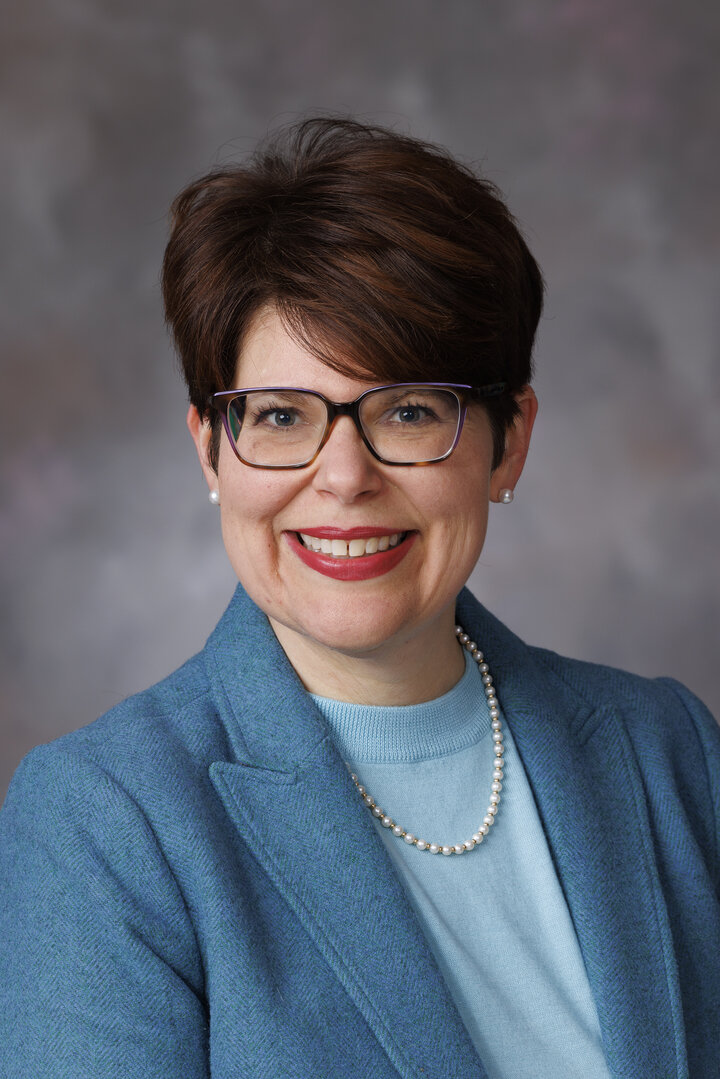
The Bureau of Sociological Research continued to provide the highest quality research support services and data collection assistance for clients across the state of Nebraska in the 2025-2026 academic year. We worked on 78 projects for researchers overall, with 31 at UNL, 22 from agencies at the State of Nebraska, 5 at other campuses across the Nebraska system, and 20 with researchers from Doane University, University of Virginia Center for Survey Research, Buffalo County Community Partners, Southeast Nebraska Development District, Travelers Marketing LLC, Winnebago Tribe of Nebraska, Douglas County Health Department, Oregon Research Institute, Millard Public Schools, Sarpy/Cass Health Department, South Dakota Grasslands Initiative, and Ducks Unlimited, Inc. These 2025-26 projects yielded $2 million in revenue. We also were delighted to showcase some of the work by our BOSR clients from across the University system at a colloquium in the Spring.
One of the biggest changes for BOSR in 2025-26 was bringing our survey telephone lab onto campus. We renovated our space on the 10th floor of Oldfather Hall, adding 12 telephone stations to the 12 stations that we already had in the main BOSR offices on the 9th floor. This relocation provides BOSR with increased support and flexibility for our clients’ telephone projects. It also makes it easier for our student employees to get to work right here on campus! Learn more about the telephone survey work that BOSR does in the section "Celebrating our Calling Lab".
BOSR continues to advance knowledge about survey methods and the state of Nebraska. Our Nebraska Snapshot report series is entering its third year, with reports in 2025-26 on satisfaction with various aspects of living in Nebraska and, most recently, Nebraskan adults’ awareness of artificial intelligence. Learn more about the Nebraska Snapshot series here. We also have a series of technical reports available from some of our methodological research available for all to read. As BOSR Director, I was the lead author on a white paper on Survey Costs for the American Association for Public Opinion Research, a topic that is extremely relevant for all work done by BOSR and survey professionals more generally.
We are so proud of our staff and student workers. Our staff continue to win awards, recognizing their excellence in continued work. The quality of our staff allows us to continue to innovate in our work, including using text messages and integrating multiple modes of data collection. Our student workers are involved across projects, including our summer interns, interviewers, data workers, and project assistants, advancing BOSR’s educational mission.
As BOSR Director, I am extremely pleased with the continued innovation and responsiveness that our staff show our clients each day. As the survey research landscape changes, BOSR draws on best practices and methodological innovation to provide the highest quality data for our clients within their budgets. We anticipate continuing to do so in the years ahead.
At a Glance
A Mission of Research
BOSR regularly conducts experiments on modes of data collection and methods for recruiting people into web surveys, analyzes data related to interviewers, and does other methodology research and development work to improve the quality of data for our clients and contribute to the science of surveys.
As part of UNL’s Year of Data, BOSR hosted a panel of researchers in the natural, physical, and health sciences. Panelists discussed their research projects, highlighting how cross-disciplinary methods enhance their research and have been supported by academic survey research services.
Panel members included:
- Eileen Hebets, a professor in the School of Biological Sciences. Her research focuses on the evolution and function of animal communication, sensory systems and mating systems.
- Shudipto Dishari, an associate professor in chemical and biomolecular engineering. Her research focuses on designing synthetic and bioderived ion-conducting and light-harvesting polymers.
- Simanti Banerjee, a professor in the Department of Agricultural Economics. Her research focuses on using surveys and experiments to study the role of information, social networks, personality traits and other economic and non-economic factors in environmental decision making.
- Krista Brown, an assistant professor in the University of Nebraska Medical Center’s Department of Environmental, Agricultural and Occupational Health. Her research focuses on cancer survivorship and quality of life, environmental exposures and human health and public health evaluation.
In addition to presenting at the American Association for Public Opinion Research conference, BOSR has been hard at work writing reports and journal articles to disseminate our results for the field to use.
These papers have all been published:
Some experiments and analyses are not suited for journal publication, but are still important to the field. These have been published as technical papers on BOSR's website:
The Nebraska Snapshot series has continued to give insights into Nebraska adults' perspectives using Nebraska Annual Social Indicators Survey (NASIS) data.
Celebrating our Calling Lab
Much of the survey research field is turning from telephone surveys to other modes of data collection. While many survey centers nationwide have closed their interviewing labs, BOSR’s is kept busy year-round. This year, we moved our telephone interviewing lab from its off-campus State-owned facility to Oldfather Hall, bringing BOSR staff together under one roof for the first time in many years!
The Nebraska Department of Health and Human Services contracts BOSR every year to conduct the Nebraska Adult Tobacco Survey (ATS), Nebraska Behavioral Risk Factor Surveillance System (BRFSS), and the Nebraska Pregnancy Risk Assessment Monitoring System (PRAMS) to inform policy decisions to improve the health of Nebraskans. ATS and BRFSS are telephone-only surveys, so having a dedicated interviewing lab is vital to the success of these projects.
Data collection modes used in the survey field are continually evolving as technology and methods of communication change. While the number of data collections that rely solely on telephone interviewing is decreasing, many projects use this method as a final attempt to reach people who have not responded to the other modes.
Some projects are incorporating reminder calls if sample members have not completed the survey by web or mail. This approach is less costly than conducting a full interview by phone and provides a different mode of contact that may get these nonresponders to complete the survey. In addition to adding 3,200 reminder calls to a mail and web survey of Nebraskans, BOSR recently partnered with the University of Virginia Center for Survey Research to conduct all their reminder calls as they phase out their own interviewing lab.
These projects could not be done without the dedication of our talented staff that help carry out this important work.
Project | Type | Number of calls | Number of Completes (by telephone) |
| BRFSS | RDD | 784,808 | 6,708 |
| ATS | RDD | 364,038 | 2,796 |
| PRAMS | RDD | 18,477 | 287 |
| Consumer | Listed | 30,599 | 926 |
| Transition | Listed | 8,722 | 425 |
| FCCH | Reminder calls | 157 | N/A |
| BAT | Reminder calls | 8,847 | N/A |
| Laborshed Omaha | Reminder calls | 2920 | N/A |
In 2025-2026, our interviewing lab employed 67 students and 21 on-call interviewers.


Phone Contacts in a Different Format
In addition to calls from our telephone lab, BOSR is reaching out to sample members through text messages. Text message invitations are used selectively and strategically, complementing existing methods such as mail and email. This approach allows the Bureau to reach participants more efficiently, particularly those who may be less responsive to traditional modes of contact, improving the timeliness of contact and increasing initial response with survey requests. The addition of texts to our toolbelt reflects our ongoing commitment to hearing from all communities and adapting data collection practices to evolving communication preferences.
Here are the projects we texted about this year:
- Behavioral Health Consumer Survey (Nebraska DHHS, Division of Behavioral Health): 14,802 texts sent
- Post-School Outcomes Project (Nebraska Department of Education): 3,464 texts sent
- Fishing Nebraska (Nebraska Game and Parks Commission): 17,900 texts sent
- Nebraska Annual Social Indicators Survey, Winter 2026 (BOSR): 5,473 texts sent
- Millard College Preparatory Survey: 305 texts sent
A Mission of Student Education
Student workers are key to BOSR’s success. We employ students as telephone interviewers, data workers, field data collectors, and interns. Some of our projects are ongoing, while others are for short periods of time, giving students the flexibility to grow at BOSR as long as they need.
In 2025-2026, BOSR employed 76 student workers and six summer interns, including one student worker who has been with BOSR for three years!
Awarded for Excellence
BOSR employees show up and stand out in the field of research, and people are taking notice. Here are the awards our staff has won in the past year.
Frank Rothell, Matt Jockers, and Monica Yapp each won a monthly Applause award. Student worker, Katrina Siefken, won a monthly Ovation award. They are recognized for their outstanding performance and service beyond the call of duty.
See the Applause Page See the Applause Archive See the Ovation Announcement
2026 SRMS Outstanding Service Award
Kristen Olson was award this award from the ASA Survey Research Methods Section "for her remarkable contribution of enthusiasm, professionalism and time to the Section through multiple services as Program Chair, Council of Sections Representative, member of organizing, fellows and awards committees as well as presentations of webinars and work as Editor."